
The War as Sacred Duty
Bhagavad GitaThis flow traces how the impending war is transformed from a political contest into a test of duty.
increasing Bearing strength in each event
 decreasing
Bearing strength in each eventdecreasingRival Armies
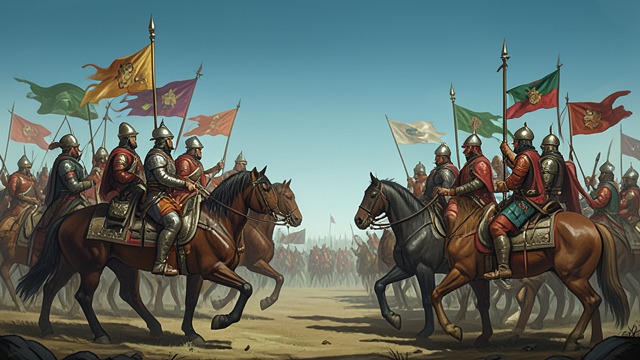
Rival Armies
Public Confrontation
The Pandava army and Kaurava army assemble on the sacred plain, turning inherited rivalry into visible conflict.
Political Pressure
Every commander embodies a history of loyalties, grievances, and obligations that exceeds the immediate battle.
Narrative Importance
The assembled armies make private hesitation impossible to conceal.
Warrior Obligation

Warrior Obligation
Social Role
Krishna reminds Arjuna that a just battle is the distinctive duty of a Kshatriya.
Honor and Shame
Abandoning the fight would damage Arjuna's reputation and allow fear to define his public identity.
Narrative Importance
Duty becomes an obligation rooted in role, consequence, and moral order.
Action Without Victory
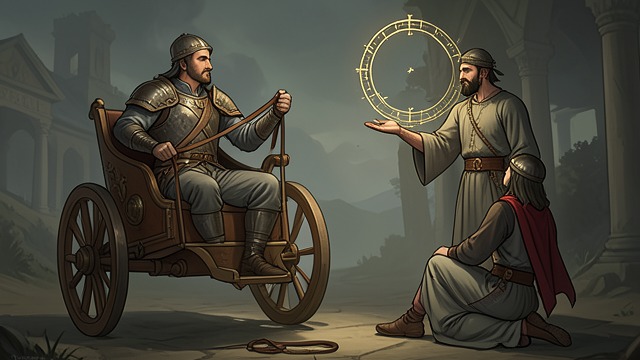
Action Without Victory
Equal Outcomes
Krishna instructs Arjuna to regard pleasure and pain, gain and loss, victory and defeat as equal.
Purified Motivation
The act matters because it is right, not because it guarantees a favorable result.
Narrative Importance
This principle separates ethical responsibility from worldly success.
Instrumental Warrior
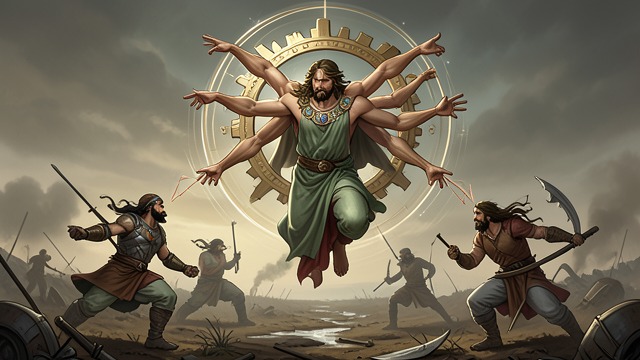
Instrumental Warrior
Predetermined Destruction
Krishna reveals that the principal warriors are already destined for destruction within the larger movement of time.
Human Agency
Arjuna is asked to become an instrument rather than claim exclusive authorship of victory.
Narrative Importance
The war becomes a meeting point of fate, divine purpose, and human action.
Battle Readiness
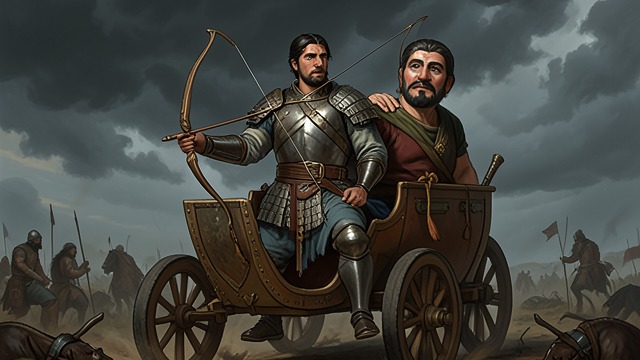
Battle Readiness
Resolution of Hesitation
Arjuna retrieves his role as a warrior without recovering his former attachment to triumph.
Ethical Reorientation
Action remains violent, but his motive is redirected toward duty and surrender.
Narrative Importance
The sacred teaching returns directly to the historical battlefield.
before the first weapons are released
during Krishna's first explanation of duty
during the teaching on Equanimity
during the cosmic revelation
immediately after the dialogue ends
